
What Wood Chipper Capacity Do You Need
A 6-inch chipper fed an 8-inch branch will jam, stall, or need that branch pre-cut down to size before it feeds at all. Buy too small and every job with real branches turns into that same slog. Buy too big and you've paid for horsepower and throat size you'll rarely use.

Book a FREE Demo
What chipping capacity actually means – Guide by experienced wood chipper suppliers
A chipper’s rated capacity, usually given in inches, is the maximum branch diameter it can process.
A 6-inch machine handles branches up to 6 inches in diameter, an 8-inch machine up to 8 inches, and so on up through the larger drum chippers.
That rated figure assumes reasonably fresh, straight timber.
Different types of wood chip differently: knotty, forked, or seasoned timber chips harder than the rating suggests, so most experienced operators work a size or two below the stated maximum for anything other than clean, straight branches.
The reduction ratio matters too: how much a branch shrinks down once chipped. A higher-powered machine with a good reduction ratio clears material faster and saves money in labour over a full day.
It also leaves a more consistent wood chip, which matters if you’re selling the output as mulch or compost, splitting it for firewood, or just clearing waste wood off site.
Disc chippers and drum chippers
Disc chippers
A disc chipper uses a flat, rotating steel disc with blades mounted on its face. Timber feeds in, the disc spins, and the blades slice through it in a clean, fast cut.
Disc chippers generally handle straight, consistent timber well and are efficient on volume, turning larger branches into consistent mulch quickly.
Our disc chippers sit around the 12-inch mark, built for contractors who need serious throughput on larger diameter material.
They come with a choice of engine outputs, so there’s a power option to match the volume you’re actually clearing rather than paying for the bigger engine by default.
Drum chippers
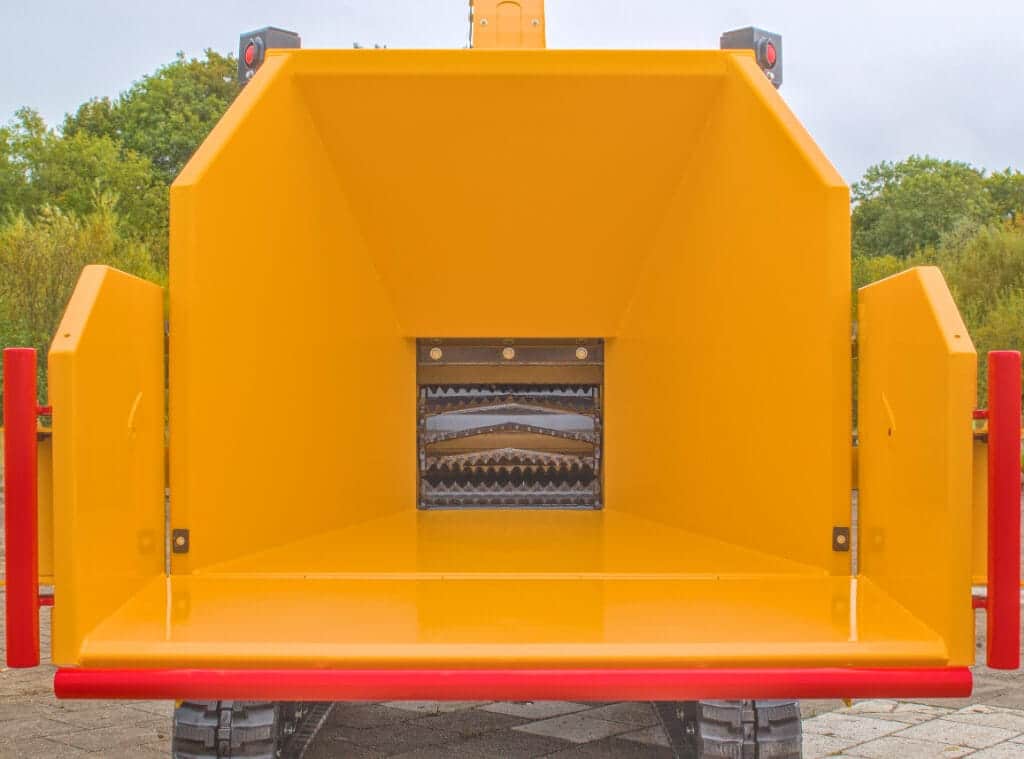
A drum chipper uses a rotating cylindrical drum with blades set along its length. The drum design tends to cope better with awkward, forked, or knotty timber than a disc, because the blade geometry bites into irregular shapes more forgivingly.
A drum chipper’s blades cut on impact rather than a clean slice, which is why it copes with a forked branch that would jam a disc chipper’s flat blade edge.
Our drum chippers run from around 13-inch up to 18-inch capacity, built for arborists and land management contractors working larger, less predictable material than typical street or garden tree work produces.
A tracked variant adds undercarriage mobility for sites a towed machine can’t reach, useful on estate and woodland contracts where the timber is well off any road.

Matching capacity to your workload
Think about the largest branches you cut on a regular job, and size the machine to that.
The one big tree from three years ago shouldn’t set the spec for a machine you’ll run every week.
It is one of the biggest mistakes we see when people are considering buying a wood chipper.
Routine hedge and site clearance
A landscaper doing routine hedge and site clearance rarely meets timber over 6 inches, so a 6-inch class chipper covers that work comfortably without paying for capacity that sits unused.
Tree surgery and larger felling work
An arborist felling and reducing larger trees needs more headroom. An 8-inch class chipper handles most tree surgery work, while our larger drum chippers step up further for contractors regularly processing thick branches and whole small trees rather than prunings.
Council and estate volume work
Council and estate teams clearing green waste at volume, storm damage, or woodland management contracts often need the largest end of the range.
Our biggest machines, up to 18-inch capacity, handle trunk sections and thick limbs a smaller machine simply can’t take.
These are industrial wood chippers built for daily trade use, a different class of machine entirely from anything aimed at a homeowner clearing a weekend’s worth of garden waste.
Horsepower and throat size go together
Throat size tells you the maximum branch diameter, but horsepower decides how fast the machine actually gets through that timber.
A 6-inch chipper with a small engine will eventually process a 6-inch branch, slowly, and it’ll bog down on anything knotty or damp.
Our diesel models carry more power than their petrol equivalents for this reason. Sustained volume work needs an engine that can hold the throat size’s rated diameter hour after hour, well beyond what the spec sheet number alone suggests.
If you’re chipping for hours at a stretch rather than the odd branch, don’t buy on throat size alone.
Petrol or diesel
Most of our range comes in petrol and diesel options. A petrol chipper is lighter and simpler, which suits contractors moving between several jobs a day and makes loading and towing work easier.
Diesel machines cost more upfront but deliver better fuel economy and torque for sustained heavy chipping, which pays back on high-volume contract work.
Both engine types cope with daily trade use across our range, and the choice usually comes down to how you work rather than raw output.
Safety features and protective gear
Every chipper in our range comes with safety features built in: emergency stop bars, feed rollers that reverse automatically if something snags, and guarding around the intake to keep hands well clear of the blades.
But as you know, the machine only covers half the job.
Wear ear protection, eye protection, and gloves every time, and keep loose clothing away from a running chipper given how much flying debris a busy feed throws out.
Proper protective gear is standard practice on every job, from the smallest compact chipper up to the largest tracked drum machine.
Keeping the right machine running with ILH Groundcare
Blades need sharpening and machines need servicing regardless of how well you matched capacity to the job.
New chippers we sell come backed by a manufacturer warranty, and we stock genuine replacement parts at our Cumbernauld workshop so servicing doesn’t mean weeks waiting on an order.
A well-maintained chipper at the right capacity for your work stays easy to maintain and reliable for years.
One that’s constantly overloaded wears out its blades, bearings, and feed system far faster than the manufacturer’s schedule ever accounts for.
If you’re not sure which throat size actually fits your workload, call our team on 0141 775 9288 or get in touch online. We’ve supplied and serviced chippers across Scotland since 2007, and we’d rather talk you into the right machine than sell you the wrong one.